William P. Bell: The Builder Behind LA's Golden Age Courses
If you have ever watched the Genesis Invitational glide across Riviera's eucalyptus-framed fairways, you have been looking at the work of a man whose name rarely leads the story. The celebrated architect at Riviera — and at Bel-Air, and on the North Course at the Los Angeles Country Club — is George C. Thomas Jr., the Philadelphia aristocrat wealthy enough to design courses without taking a fee. But Thomas did not work alone. His partner in turning drawings into dirt, sand, and grass — in assembling crews, moving earth in Santa Monica Canyon, and shaping the torn-edged bunkers those courses are still famous for — was William P. Bell, known as Billy Bell. At Bel-Air his name sits in the official design credit alongside Thomas's (listed first, in fact), and a striking share of Los Angeles golf's golden age passed through his hands. Yet outside golf-architecture circles, hardly anyone knows him.
There is a catch to telling his story, and it is worth stating up front: there were two Billy Bells. William P. Bell the father built LA's golden age; William F. Bell the son built the postwar West, including Torrey Pines. They are conflated constantly — even by sources that should know better. This is the father's story, with a section at the end to keep the two straight.
From Pennsylvania Caddie Yards to Pasadena
William Park Bell was born on April 19, 1886, in Canonsburg, Pennsylvania. He studied at Duff's Business Institute in Pittsburgh, and in 1911, at 25, he did what so many figures in this series did: he came to Southern California and never left.
Bell's golf education was earned from the ground up — literally. He worked at Pasadena Country Club as caddymaster and later as course superintendent, then moved into course construction under the Scottish architect Willie Watson, serving as Watson's construction superintendent. By 1920 he had gone out on his own. It is the classic builder's résumé: not a champion golfer turned designer, but a man who understood turf, drainage, labor, and land because he had managed all four for a living.
That practical grounding is why, when George C. Thomas Jr. went looking for someone who could execute his Los Angeles designs, Bell was the man standing next to the architect.
The Thomas–Bell Partnership
Thomas arrived in Los Angeles wealthy enough that he could afford to work for free — and on Riviera, commissioned by the Los Angeles Athletic Club, he did exactly that. What Thomas needed was a partner who could execute. Beginning with La Cumbre in Santa Barbara in 1920, Thomas and Bell formed a remarkably productive architect–builder partnership. Together they produced, in a single astonishing decade:
La Cumbre Country Club, Santa Barbara (1920) — Bell supervised construction; the course has since been redone
Ojai (now the Ojai Valley Inn) — the course glass magnate Edward Libbey commissioned with the instruction to “build me the finest course that can be built on my property”
Bel-Air Country Club (designed 1925, opened 1926) — where the design credit reads “William P. Bell & George C. Thomas, Jr.”
Riviera Country Club (opened 1926)
Fox Hills Golf Course, Culver City (1927, since demolished)
Los Angeles Country Club, North Course — the comprehensive 1927–28 redesign. (Thomas had earlier reworked the North with Herbert Fowler in 1921, before his partnership with Bell.)
Stanford University Golf Course (1930), the partnership's northern finale
And at Palos Verdes Golf Club (1924), the usual billing flipped: Bell was the designer, with Thomas serving as his consultant — a credit that says plenty about how much the architect trusted his builder. Thomas, who published his landmark book Golf Architecture in America in 1927, was the byline the public knew. But golf historians have long been clear that Bell made significant contributions to the designs themselves — routing refinements, green contours, and above all the bunkering, those torn-edged, sprawling sand shapes that made Thomas–Bell courses look windswept and ancient in a city barely fifty years old.
Riviera: The Stage He Built
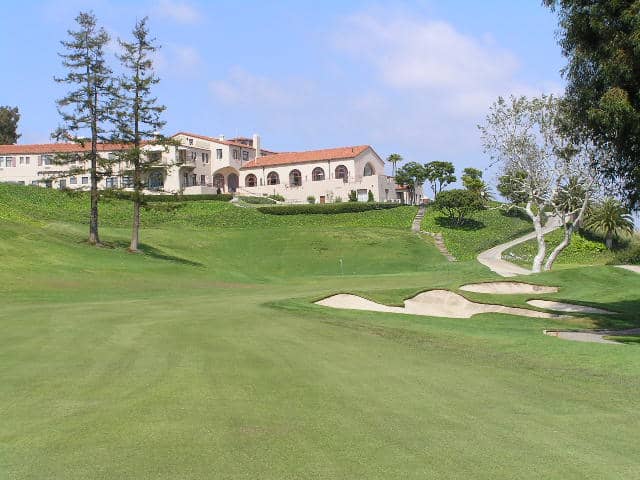
Riviera is the partnership's masterpiece and the best place to understand what Bell actually did. The Los Angeles Athletic Club's course in Santa Monica Canyon cost $243,827 to build — one of the most expensive golf course projects of its era — and Thomas and Bell together took charge of assembling the labor force that built it from scratch, hauling material into a canyon and shaping a barranca-crossed course out of it. Turning that plan into playable ground was Bell's side of the bargain.
What they built became Los Angeles golf's permanent stage. The Los Angeles Open — which had debuted in 1926 at LACC with a $10,000 purse, then the richest in professional golf — settled at Riviera in 1973 and has been played there nearly every year since, the exceptions being 1983, 1998, and 2025, when the January wildfires forced a one-year move to Torrey Pines. Counting its earlier Riviera runs in 1929–30 and 1945–53, the tournament had been staged there 62 times in all through the 2026 Genesis Invitational, the event's centennial edition hosted by Tiger Woods. Ben Hogan won back-to-back LA Opens there in 1947 and 1948 and added the 1948 U.S. Open, a run so dominant that sportswriters took to calling the place “Hogan's Alley”. Tiger Woods made his PGA Tour debut on these fairways. The 2028 Olympic golf competition and the 2031 U.S. Open are coming to them next.
And here is the detail that says the most about Bell's craft: when Ben Crenshaw and Bill Coore were brought in to rework Riviera's bunkers in 1992, their brief was to restore them to their original appearance — the way Bell built them in 1926. Sixty-six years on, the gold standard was still the builder's own hand.
Bel-Air and the LACC North
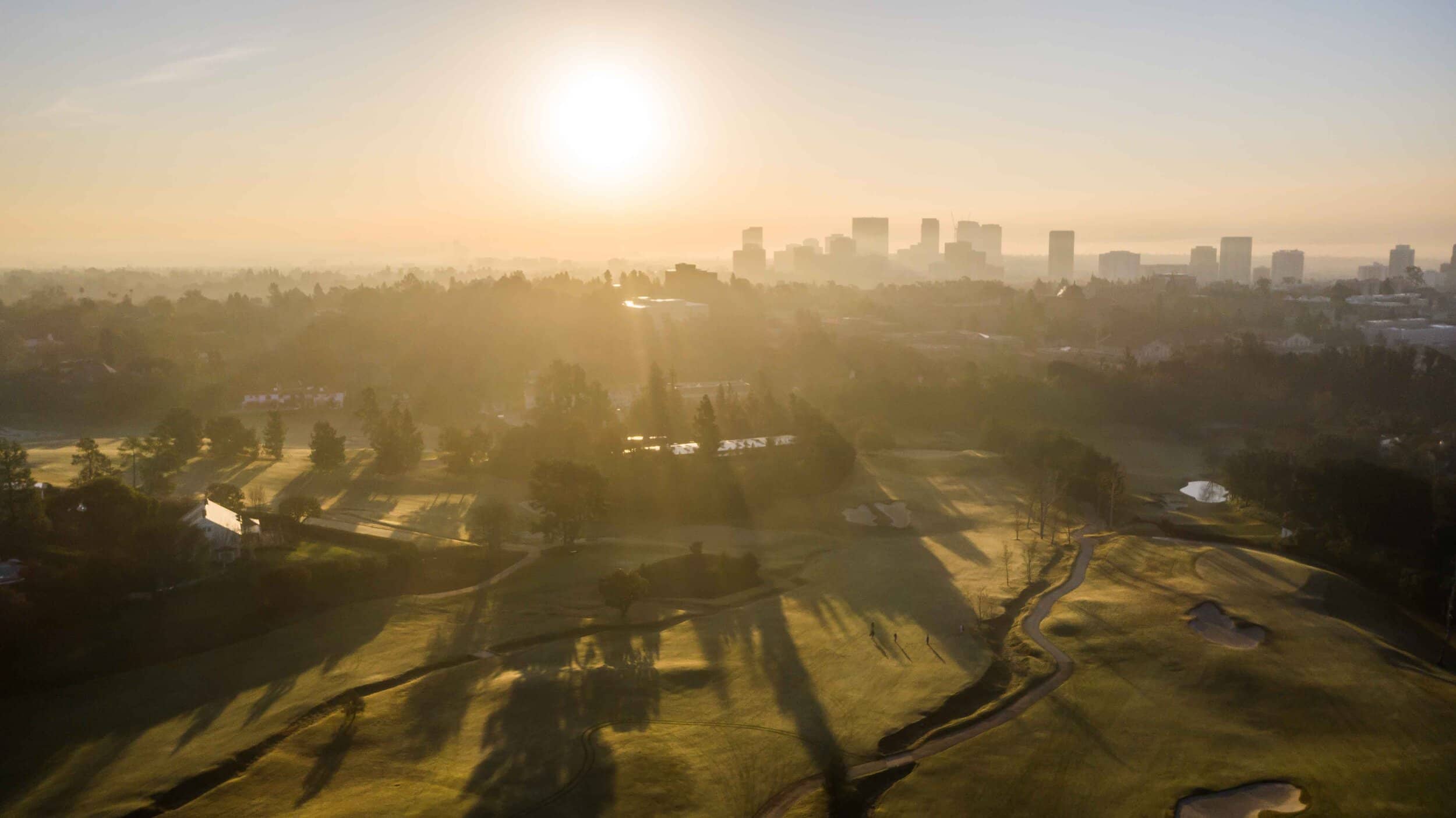
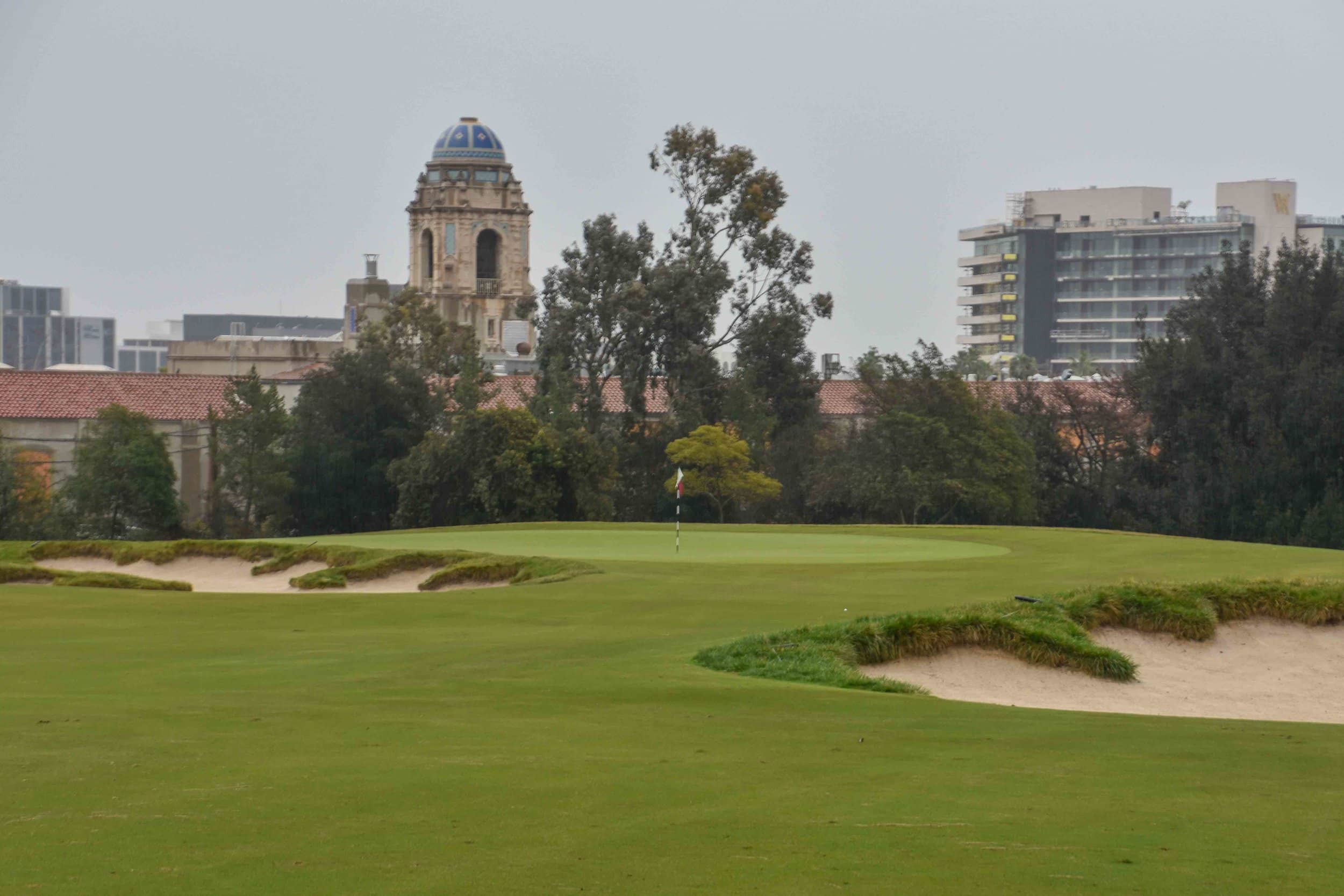
The other two jewels of the partnership frame Riviera on either side of the Santa Monica Mountains. Bel-Air Country Club (1926) threads its holes through the canyons above UCLA — a routing so audacious it required tunnels and the club's famous swinging bridge — and it is the course where Bell's name leads the design credit. And at the Los Angeles Country Club, Thomas and Bell returned in 1927–28 to comprehensively redesign the North Course that Thomas and Herbert Fowler had reworked earlier in the decade.
That work has aged into vindication. In 2010, Gil Hanse and golf historian Geoff Shackelford began an extensive restoration of the North aimed at returning it to Thomas's design — and in 2023 the course hosted the U.S. Open, won by Wyndham Clark. It was the Los Angeles area's first U.S. Open in 75 years. The previous one? Hogan's, in 1948, at Riviera — on ground Billy Bell built.
The People's Builder: Bell's Public Courses
Bell's golden-age reputation rests on private clubs, but his fingerprints are all over the public golf that made Los Angeles a muni town. In Pasadena he designed both courses at Brookside, in the Arroyo Seco beside the Rose Bowl — good enough that the LA Open itself came to Brookside in 1968, when Billy Casper won there.
Then there is Rancho Park, the busiest stage in this whole story. When the private Rancho Country Club failed and the City of Los Angeles turned its land into Cheviot Hills Park in 1945, a new public course rose on the site, opening in 1947 with design credit to William P. Bell and William H. Johnson — though here the two-Bells confusion strikes again, as some records instead name the son, William Francis Bell, who had joined the family practice after the war. Whichever Bell held the pencil, the family firm gave Los Angeles one of the most consequential municipal courses in America: Rancho Park hosted the LA Open 17 times between 1956 and 1983. Jack Nicklaus teed it up there in January 1962 in his first tournament as a professional, and in 1969 Charlie Sifford — at 46, opening with a 63 and winning a playoff over Harold Henning — took the LA Open on a public course any Angeleno could play, one of the most important victories in the breaking of golf's color line.
In all, the elder Bell designed more than fifty courses across California, Nevada, Arizona, Utah, Oregon, and Hawaii. During World War II he served as a turf consultant to the U.S. Army Corps of Engineers, and in 1947 he helped found the American Society of Golf Course Architects — the profession's governing body — serving as its president in 1952. Not bad for a former caddymaster. He died in Pasadena on June 21, 1953, at 67, and is buried at Mountain View Cemetery in Altadena.
The Two Billy Bells: Don't Mix Them Up
Now, the disambiguation this story requires.
William Park Bell (1886–1953) — “Billy Bell” — is the subject of this post: Pennsylvania-born, the builder-collaborator of George C. Thomas Jr., the man behind Riviera, Bel-Air, the LACC North, and Brookside, ASGCA founding member and 1952 president.
William Francis Bell (1918–1984) — “Billy Bell Jr.” — was his son, born in Pasadena, educated at USC, trained in his father's practice, and a partner in it after World War II. After his father's death he became one of the most prolific architects in the American West, with more than 200 courses to his name — most famously the North and South courses at Torrey Pines in San Diego, which opened in 1957 and whose South Course hosted the 2008 and 2021 U.S. Opens. He was elected to the ASGCA in 1950 and served as its president in 1957–58, making the Bells the only father and son to each hold the office in the society's first decade.
Because both men signed their work “William Bell,” and because the son finished projects the father started, the credits blur everywhere — Wikipedia's own entry on the father lists Torrey Pines among his designs, though the course opened four years after his death. The honest rule of thumb: golden-age Los Angeles (1920s–1940s) is the father; the postwar boom from San Diego to Hawaii is the son.
Where to Play the Bells' Los Angeles
The remarkable thing about William P. Bell's legacy is how much of it you can still stand on. Riviera and Bel-Air remain two of the most celebrated courses in the country, and the LACC North's 2023 U.S. Open confirmed that the Thomas–Bell work of the 1920s is not just historically important but championship-current. And unlike most golden-age architects, Bell left ordinary golfers a share of the estate: Brookside and Rancho Park are city-run courses where a green fee buys you a walk through the same story — the course where Nicklaus turned pro, where Sifford broke through, in the city where the LA Open just turned one hundred.
George C. Thomas Jr. gave Los Angeles its greatest designs, and he rightly gets his own chapter in this series. But every architect needs a builder, and in a former Pasadena caddymaster Los Angeles found an exceptional one. The next time a broadcast lingers on Riviera's bunkers, remember whose hands helped shape them.
This post is part of our series on the people who shaped Los Angeles golf — meet the rest in The Most Influential Figures in Los Angeles Golf.