The History of Golf in Los Angeles
San Francisco produced golf's people; Los Angeles built golf's stage. That is the shortest honest way to tell this story. Almost none of the figures who defined LA golf were born here — Ben Hogan and Babe Didrikson Zaharias were Texans, Charlie Sifford came from North Carolina, Maggie Hathaway from Louisiana, and even Tiger Woods grew up down the freeway in Cypress, in Orange County. But when American golf needed a bigger room — a richer purse, a brighter spotlight, a harder-fought breakthrough — it came to Los Angeles. The first Los Angeles Open in 1926 carried a $10,000 purse. The first woman ever to tee it up in a men's PGA Tour event did it here. The color line cracked on LA's public fairways. And the next century is already booked: Olympic golf comes to Los Angeles for the first time when the Games return in 2028, with a U.S. Open to follow in 2031.
This is the full story — from a nine-hole course with a windmill for a clubhouse to the 100th anniversary of the first LA Open.
1897: The Windmill Links
Los Angeles golf begins, improbably, with an abandoned windmill. In the fall of 1897 a group of Angelenos organized the Los Angeles Golf Club and laid out a nine-hole course near Pico and Alvarado, just west of downtown. The clubhouse was fashioned from an old windmill, and the course was promptly nicknamed “The Windmill Links.”
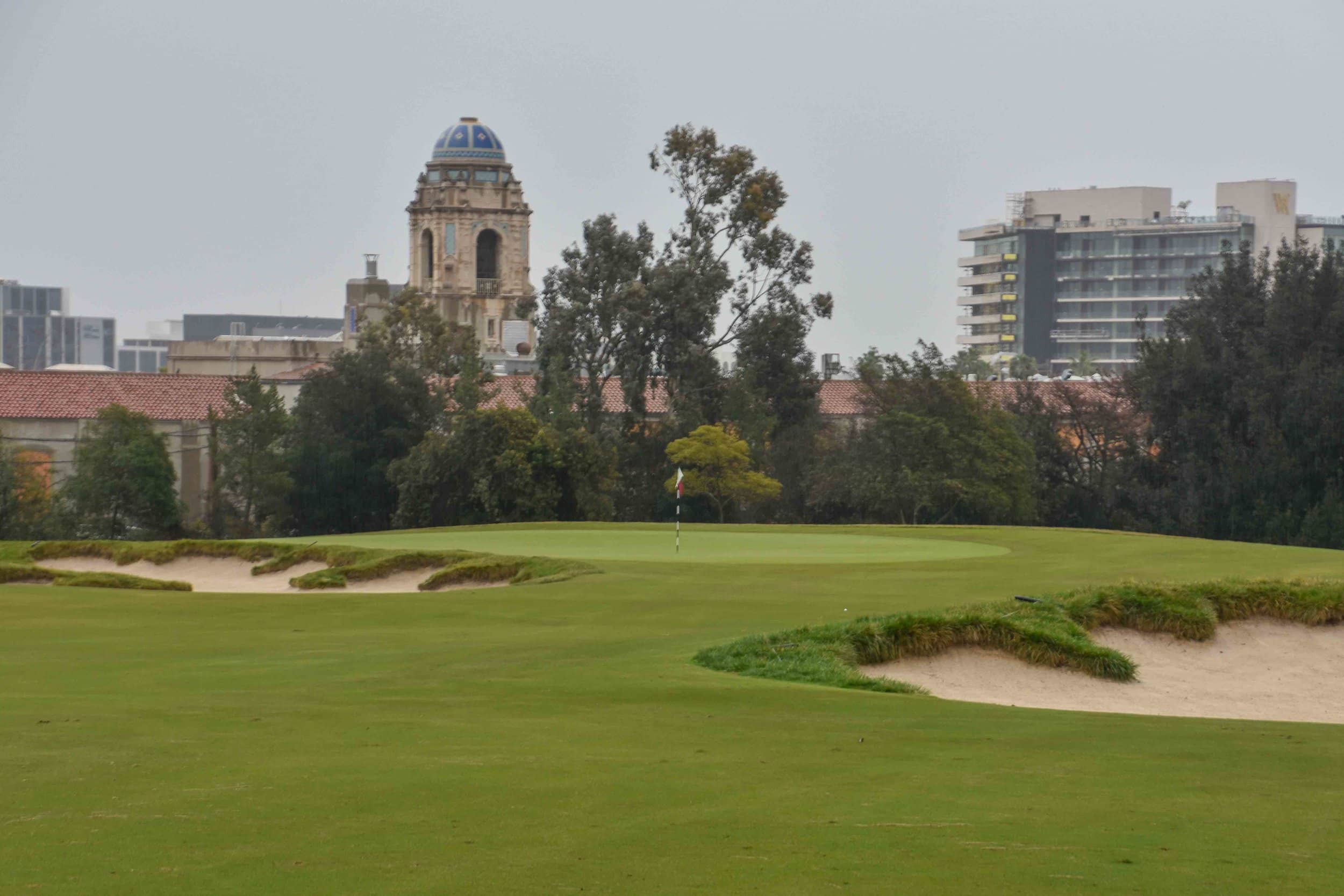
The club outgrew the site within a year, moving to the “Convent Links” in Pico Heights before its members — by then reorganized as the Los Angeles Country Club — settled permanently on Wilshire Boulevard in 1911. The original layout was the work of the club's own founders and members; it took professional hands, first Herbert Fowler and then George C. Thomas Jr., to turn LACC into a championship course. Thomas, working with William P. Bell, reworked the North Course in 1927–28 into the design that would eventually host the 2023 U.S. Open.
That arc — from windmill to U.S. Open — took 126 years. But the more distinctive LA story was happening off private property entirely.
Golf for everyone: Griffith Park and the municipal system
In 1896, Griffith J. Griffith donated more than 3,000 acres of Rancho Los Feliz to the city of Los Angeles with a declaration that public parks should be places “where neither race, creed nor color should be excluded.” Within two decades, that land held the foundation of public golf in the West.
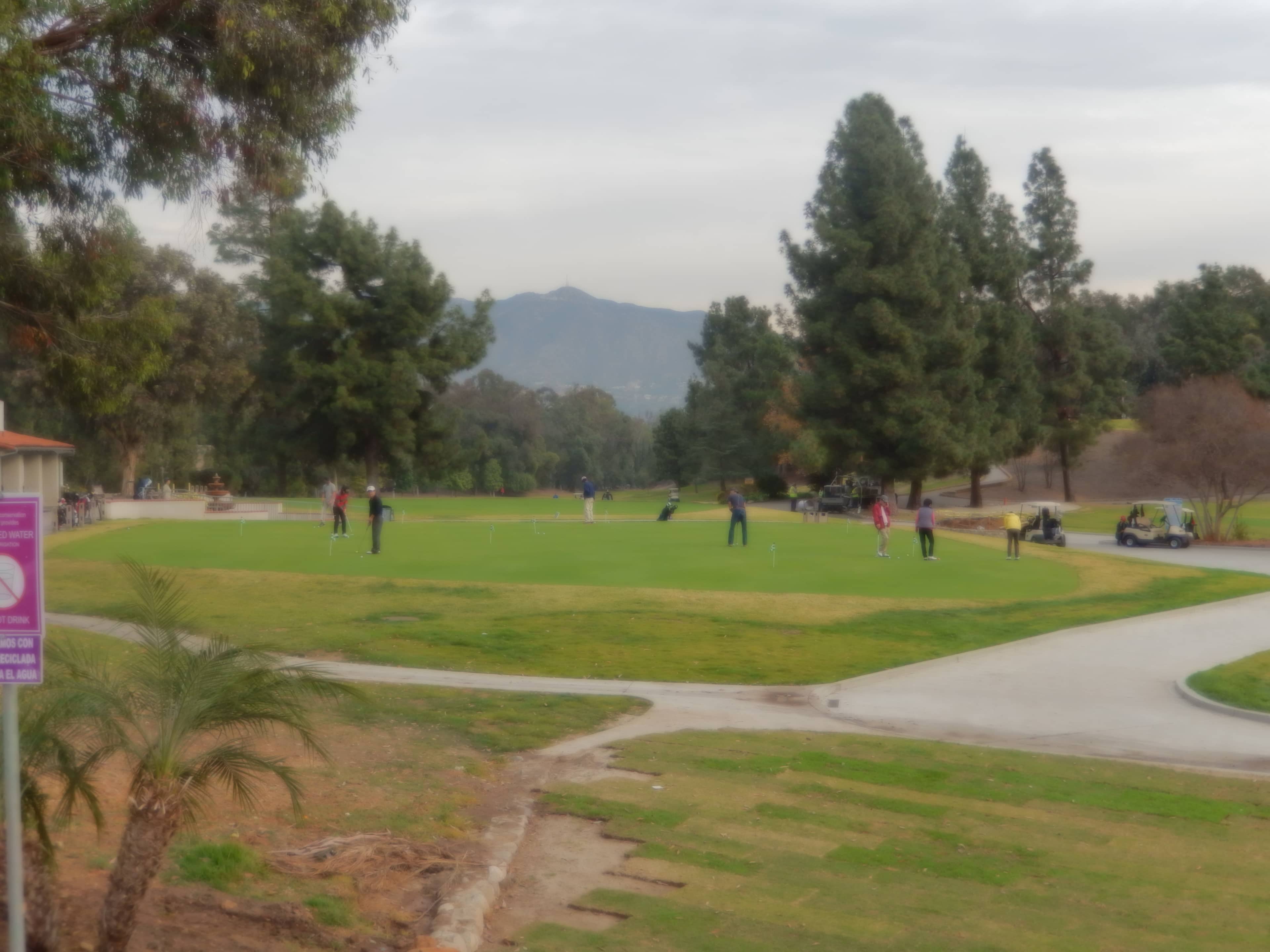
Griffith Park's Municipal Links No. 1, designed by Tom Bendelow, opened in late 1914 — the first 18-hole municipal golf course west of the Mississippi, built for about $13,000 with sand-and-oil greens. It was followed by two all-grass layouts from George C. Thomas Jr.: the Harding course, where Thomas himself drove the first ball at the opening ceremonies in August 1923, and the Wilson course, which opened in 1927.
The municipal idea kept compounding. Rancho Park opened in Cheviot Hills in 1947 and became, arguably, the most important municipal golf course in American tournament history — more on that below. Today Los Angeles County alone operates a network of 20 courses it calls the largest municipal golf system in the country. No other American city wove public golf so deeply into its sporting identity.
The Golden Age builders: George C. Thomas Jr. and William P. Bell
If LA is a stage, two men built most of the scenery. George C. Thomas Jr., a Philadelphia banking heir who moved to California in 1919, designed more than 20 courses — most of them in Southern California, and most of them with a Pasadena-based construction partner named William P. Bell.
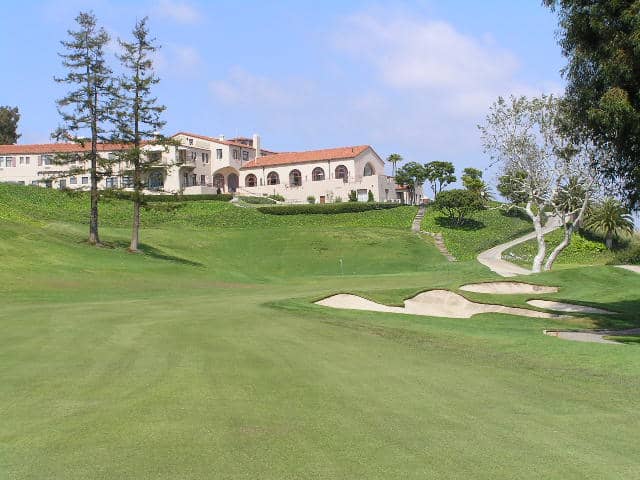
Their masterpiece is the Riviera Country Club in Pacific Palisades, opened in 1926 as the Los Angeles Athletic Club's golf course at a construction cost of $243,827 — one of the most expensive builds in golf history to that point. Thomas and Bell also created Bel-Air Country Club and redesigned LACC's North Course, and Thomas gave the city its two grass municipal courses in Griffith Park. Thomas, who was also a celebrated rose breeder, published his influential book Golf Architecture in America: Its Strategy and Construction in 1927 and died in 1932.
Bell deserves to be more than a footnote to Thomas. A Pennsylvanian who came west at 25, he designed over 50 courses across the western United States, built Bel-Air, worked with A.W. Tillinghast at Virginia Country Club in Long Beach, and became a founding member and 1952 president of the American Society of Golf Course Architects. One caution for anyone reading old scorecards: his son, William Francis Bell (1918–1984), trained alongside him and became a prolific architect in his own right, and Southern California course credits routinely confuse the two Bells. Father and son together account for a remarkable share of everything Angelenos play today.
1926: The richest purse in golf
On the second week of January 1926, the Los Angeles Open debuted at the Los Angeles Country Club with a $10,000 purse — headline-making money in professional golf at the time. A 21-year-old Texan named Harry Cooper won it, taking the $3,500 first prize and playing his final 18 holes in two and a half hours, which prompted sportswriter Damon Runyon to christen him “Lighthorse Harry.”
The tournament then went wandering, and its itinerary doubles as a map of LA's golf boom: El Caballero in 1927, Wilshire Country Club — Norman Macbeth's 1919 design in Hancock Park, famously bisected by Beverly Boulevard — for four editions between 1928 and 1944, Hillcrest in 1932 and 1942, Griffith Park from 1937 to 1939, and municipal Rancho Park seventeen times between 1956 and 1983.
In 1973 the LA Open settled at Riviera, which has hosted it nearly every year since. The exceptions: 1983, when it went back to Rancho Park; 1998, when it moved to Valencia Country Club while Riviera prepared for the U.S. Senior Open; and 2025, when the January Palisades wildfires — which burned through Riviera's own neighborhood — forced a relocation to Torrey Pines. The names changed too: Nissan Open, Northern Trust Open, then the Genesis Open in 2017, when Tiger Woods's TGR Foundation became the tournament's host organization, and since 2020 the Genesis Invitational, an elevated invitational event. But the lineage is unbroken. In February 2026 the tournament marked the 100th anniversary of the first LA Open, with Jacob Bridgeman winning at Riviera at 18 under par — one hundred years after Lighthorse Harry.
Hogan's Alley
No player is more tightly bound to Riviera than Ben Hogan. The Texan won the Los Angeles Open there in 1947 and 1948, then returned in June 1948 and won the U.S. Open on the same course — three victories in eighteen months that led sportswriters to nickname Riviera “Hogan's Alley.”
Riviera has kept collecting big occasions ever since: the PGA Championship in 1983 (Hal Sutton) and 1995 (Steve Elkington), the 1998 U.S. Senior Open, the 2017 U.S. Amateur. And its biggest are still ahead — Riviera will host the golf competition at the 2028 Summer Olympics and the U.S. Open in 2031, the second in the club's history.
Breaking through: the public-course revolution
The most consequential chapters of Los Angeles golf history did not happen behind club gates. They happened on municipal courses, where golf's gender line and color line both cracked.
Babe Didrikson Zaharias, 1938
In January 1938, Babe Didrikson — already a double gold medalist from the 1932 Los Angeles Olympics, where she set a world record in the 80-meter hurdles — entered the Los Angeles Open, then being played at Griffith Park. She became the first woman to compete in a men's PGA Tour event. She shot 81–84 and missed the cut, but the week changed her life anyway: she was paired with a professional wrestler named George Zaharias, and they married that December. She returned to the Los Angeles Open in January 1945 and made the cut — part of a run of three straight made cuts that month that no other woman has matched in a regular PGA Tour event since.
Bill Spiller and the Caucasian clause
Until 1961, the PGA of America's constitution restricted membership to golfers of the Caucasian race. The fight against that clause ran through Los Angeles, and much of it through one man: Bill Spiller, an LA-based Black professional who sued the PGA in 1948, alongside Ted Rhodes, after being barred from the Richmond Open. In 1952, PGA president Horton Smith moved to exclude Spiller and boxing champion Joe Louis from the San Diego Open, and the outcry went national. The PGA partially backed down: Louis, an amateur, was allowed to play on a sponsor's exemption — by many accounts the first African American to compete in a PGA Tour event — while Spiller and the other Black professionals remained shut out by the clause. It finally fell in 1961, after California's attorney general threatened to bar the PGA from the state's public courses.
The home base for LA's Black golf community in those years was the Western Avenue Golf Course in South LA — one of the first public courses in Los Angeles where Black players were welcome. In 1982 the county renamed it Chester Washington Golf Course, honoring the pioneering Black journalist who became an editor at the Los Angeles Sentinel.
Charlie Sifford, 1969
Charlie Sifford, born in Charlotte in 1922, became the first Black member of the PGA Tour after the clause fell and won the 1967 Greater Hartford Open. But his defining victory came in Los Angeles: the 1969 Los Angeles Open at Rancho Park, the city-owned muni, where the 46-year-old beat Harold Henning on the first playoff hole. A Black champion at a public course, in the tournament that had drawn the game's richest purse — no moment better captures what LA golf had become. In 2004 Sifford became the first African American inducted into the World Golf Hall of Fame, and in 2014 he received the Presidential Medal of Freedom.
Maggie Hathaway's course
Maggie Hathaway (1911–2001) came to LA from Louisiana and lived several public lives — blues singer, actress, sportswriter — before becoming the conscience of Los Angeles golf. She took up the game in 1955 after winning a bet against Joe Louis, founded the Minority Associated Golfers in 1960 to advocate for Black golfers and golf jobs, picketed courses that wouldn't hire Black professionals, helped establish the Beverly Hills/Hollywood NAACP branch, and co-founded the NAACP Image Awards with Sammy Davis Jr.
In 1997, the county renamed the nine-hole Jack Thompson par-3 at 98th and Western in her honor. And her story has a very current ending: after a renovation designed by Gil Hanse — funded by $7.8 million from Los Angeles County and $12 million in private donations — the Maggie Hathaway Golf Course reopened on March 28, 2026, reborn as a gateway for junior golf in South LA ahead of the 2028 Olympics.
Hollywood's home game
No other golf city has LA's particular glamour, because no other golf city shares a fence line with the movie business. Lakeside Golf Club in Toluca Lake, next door to the studios, became the industry's clubhouse: Bing Crosby was a five-time Lakeside club champion — a two-handicap at his best — and in 1937 he founded the pro-am “Crosby Clambake” that evolved into the AT&T Pebble Beach Pro-Am. Bob Hope, his partner in the Road pictures, was said to play in as many as 150 charity golf tournaments a year. The desert tournament that later carried his name was founded in Palm Springs in 1960; Hope became its host and namesake in 1965, when it was renamed the Bob Hope Desert Classic — a Coachella Valley event rather than a Los Angeles one, but powered by Hollywood star wattage.
Hollywood's club scene also carried LA's exclusions and answers to them. Hillcrest Country Club, founded in 1920 in Cheviot Hills, was the first country club for the city's Jewish community, created when Jews were barred from LA's other clubs. Its Round Table — Jack Benny, George Burns, the Marx Brothers, Danny Kaye, Milton Berle — made it, by one account, the most amusing lunch in the world, and its golf credentials are real: Hillcrest hosted the 1929 PGA Championship and the Los Angeles Opens of 1932 and 1942, the latter Ben Hogan's first LA Open title.
Prodigies and legends: the modern era
Rancho Park's tournament years made it a proving ground. In early January 1962, a 21-year-old named Jack Nicklaus chose the Los Angeles Open to make his professional debut — he tied for 50th, last among those who made the cut, and earned $33.33. It remains one of the great trivia answers in golf: the most decorated career in the sport's history began at a Los Angeles muni.
Thirty years later, another prodigy debuted up the road. Tiger Woods — born in Cypress, in Orange County, and never an Angeleno, though LA became his stage — played his first PGA Tour event at Riviera in 1992 as a 16-year-old amateur on a sponsor exemption. He missed the cut, and the tournament became his famous unfinished business. He lost a playoff to Billy Mayfair at the 1998 edition — though that year the event was actually played at Valencia Country Club while Riviera prepared for the U.S. Senior Open — and at Riviera itself his best results are runner-up finishes, including in 1999. It remains a course he has never won. Today he is the tournament's host: his TGR Foundation has organized it since 2017, and it has been played as the Genesis Invitational since 2020.
The LPGA's LA claim is stronger still. Amy Alcott, born in Kansas City in 1956 but raised in Los Angeles — she graduated from Palisades High School, minutes from Riviera — turned professional at 18, won 29 LPGA Tour events and five major championships, including the 1980 U.S. Women's Open, and started one of golf's happiest traditions by leaping into Poppie's Pond after her 1988 Dinah Shore win. She entered the World Golf Hall of Fame in 1999 and later joined the architectural team for the Rio 2016 Olympic golf course — an LA public-golf kid helping design golf's return to the Olympics. Wilshire Country Club, an LA Open host in the 1930s and 40s, carried the torch on the women's side too, hosting the LPGA's LA event from 2018 to 2022.
The next century
Los Angeles golf's second hundred years opened with a flourish. The 2023 U.S. Open came to the Los Angeles Country Club — the direct descendant of the Windmill Links — with Wyndham Clark winning on George Thomas's North Course. The Genesis Invitational marked 100 years of the LA Open lineage in 2026. The Maggie Hathaway Golf Course reopened the same spring. Ahead sit the 2028 Olympic golf competition and the 2031 U.S. Open, both at Riviera.
The through line, from 1897 to 2031, is the same: Los Angeles is where golf goes to be seen — and, at its best, where the game's doors got pushed open on public land. The people in this story mostly came from somewhere else. Their defining moments happened here.
This is the first post in our Los Angeles golf history series. Explore the rest: The Most Influential Figures in Los Angeles Golf; Breaking Through: How LA's Public Courses Opened Golf to Everyone; The Los Angeles Open at 100; Hollywood's Home Game; Ben Hogan and Hogan's Alley; Babe Didrikson Zaharias and the 1938 LA Open; Charlie Sifford's 1969 win at Rancho Park; Maggie Hathaway; William P. Bell; Tiger Woods and Riviera; Amy Alcott; and George C. Thomas Jr., the architect behind LA's greatest courses.