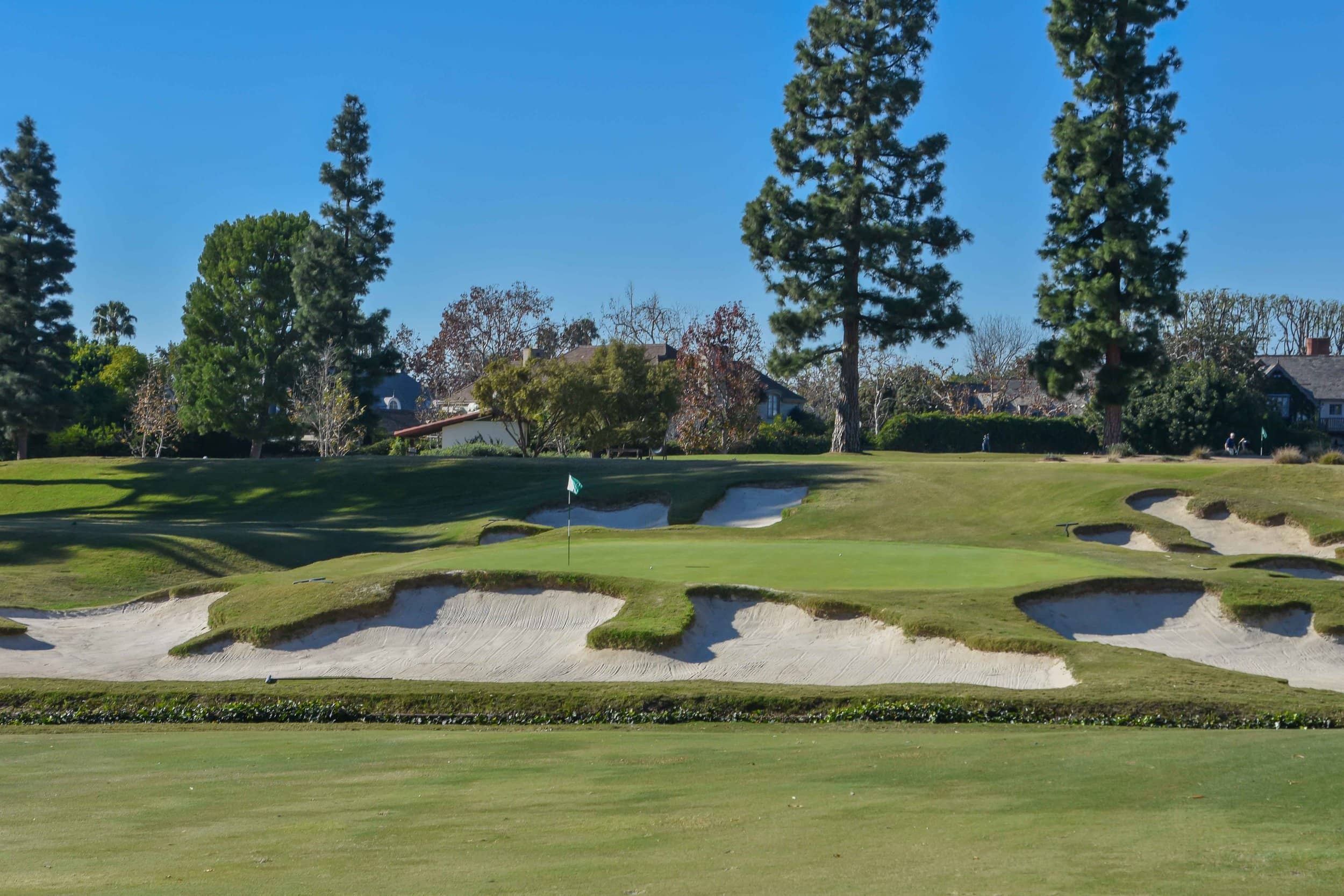
The Los Angeles Open at 100: From the Windmill City to the Genesis Invitational
In February 2026, the Genesis Invitational returned to Riviera Country Club and quietly did something no other West Coast tournament can claim: it turned one hundred. The event Jacob Bridgeman won at 18-under is, by direct descent, the same Los Angeles Open that teed off at the Los Angeles Country Club in January 1926 — and the century in between is the story of Los Angeles becoming professional golf's biggest stage.
San Francisco may have produced more of golf's people, but LA built the room where the game performed. What was then the richest purse in professional golf was posted here. Hogan's Alley was christened here. The first woman to play in a men's PGA tournament teed it up here, Jack Nicklaus cashed his first professional check here (all $33.33 of it), and Charlie Sifford won on a city-owned municipal course here. This is how the LA Open got from a windmill to the Genesis Invitational.
Before the Open: the Windmill City
The tournament's host had humble beginnings. In the fall of 1897, a group of Los Angeles residents organized the Los Angeles Golf Club on leased land at Pico and Alvarado, playing nine rough holes around a clubhouse crafted from the bottom of an abandoned windmill — the "Windmill Links." Overcrowding pushed the club through a series of moves (including a stint at the "Convent Links" near 16th and Hobart) before it settled, as the Los Angeles Country Club, on its permanent West Side property, reopening there on May 30, 1911.
By the mid-1920s that scrappy windmill club had become one of the grandest addresses in Western golf — grand enough to host something the city's boosters had in mind.
1926: golf's then-richest purse
The Los Angeles Open was a promotion before it was a tradition. The Los Angeles Junior Chamber of Commerce put up a $10,000 purse for the first LA Open in 1926 — the richest prize in professional golf at the time — and staged it at the Los Angeles Country Club. The message to the touring pros wintering in California was unsubtle: the biggest money in the game was now in Los Angeles.
The inaugural winner was a 21-year-old named Harry Cooper, who shot 279 and played so briskly — covering his final 18 holes in about two and a half hours — that sportswriter Damon Runyon nicknamed him "Lighthorse Harry" on the spot. The nickname stuck for the rest of Cooper's career; so did the tournament.
The wandering years: a tour of golden-age Los Angeles
For its first three decades the LA Open behaved like a progressive dinner party across the city's golden-age courses. It went to El Caballero Country Club in Tarzana in 1927, then to Wilshire Country Club in 1928, which would host four editions between 1928 and 1944. Hillcrest Country Club took turns as well, and from 1937 to 1939 the tournament played a run at Griffith Park's Wilson Course — a genuine public facility in the city's sprawling municipal park. Along the way, Macdonald Smith became the event's first serial champion, winning four LA Opens between 1928 and 1934.
That Griffith Park stretch produced the tournament's first history-making moment.
1938: Babe Didrikson Zaharias breaks the gender line
In January 1938, Babe Didrikson — already famous in Los Angeles for winning two gold medals and a silver at the 1932 LA Olympics — entered the Los Angeles Open and broke professional golf's gender line, widely recognized as the first woman to play in a men's PGA tournament. She shot 81–84 and missed the cut, but the pairing mattered more than the scores: she played alongside a professional wrestler named George Zaharias, and the two married eleven months later, on December 23, 1938.
She wasn't done with the LA Open, either. Returning in January 1945, Zaharias shot 76–81 to survive the tournament's 36-hole cut — part of a three-tournament run that made her the first and, to this day, only woman to make a cut on the PGA Tour. Both halves of that story belong to Los Angeles.
Riviera and the christening of Hogan's Alley
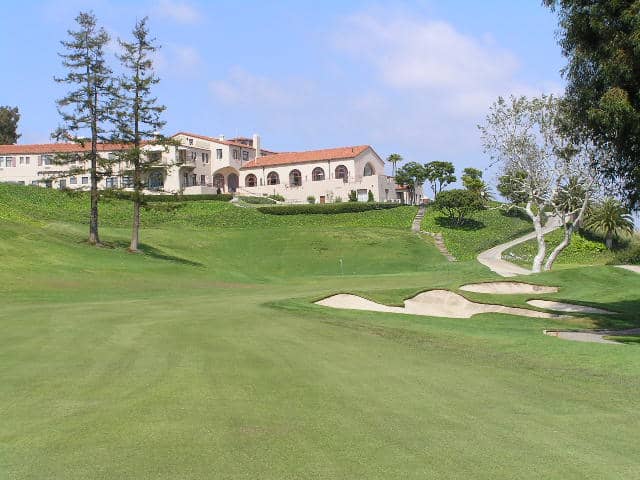
Riviera Country Club entered the rotation early. George C. Thomas Jr. designed the course with William P. Bell in the canyon below Pacific Palisades, and it opened in 1926 at a cost of $243,827 — one of the most expensive golf course builds in history at the time. The LA Open first visited in 1929 and 1930, returned in 1941, and then settled in for nine consecutive years from 1945 through 1953.
That postwar stretch is when the course acquired its second name. Ben Hogan won the Los Angeles Open three times — first in 1942, when the tournament was played at Hillcrest Country Club, then back-to-back at Riviera in 1947 and 1948 — and in June 1948 he won the U.S. Open at Riviera in a record score. It was the Riviera run that earned the nickname: after a runner-up finish there in 1946, Hogan won the 1947 and 1948 LA Opens and the 1948 U.S. Open on the same course in roughly sixteen months, and sportswriters christened Riviera "Hogan's Alley." No golf nickname has aged better. When Hogan returned to the 1950 LA Open barely a year after his near-fatal car crash and lost a playoff to Sam Snead, the tournament had its most emotional chapter yet.
The Rancho Park years: a major-league event on a municipal course
Here is the fact that makes the LA Open unlike almost any other stop in professional golf: for the better part of two decades, one of the tour's marquee events was played on a public course where any Angeleno could book a tee time. After single years at Fox Hills (1954) and Inglewood Country Club (1955), the tournament moved to Rancho Park Golf Course, the city-owned muni on Pico Boulevard, and stayed from 1956 through 1972 (with a single detour to Brookside in 1968). Counting a return visit in 1983, Rancho Park hosted the LA Open seventeen times — more than any course except Riviera itself.
The Rancho era supplied an outsized share of the tournament's lore:
January 1962: a 21-year-old Jack Nicklaus made his professional debut at the LA Open, tied for 50th — last place among those who made the cut — and earned exactly $33.33. It remains the most famous small check in golf.
Arnold Palmer won the event three times in the 1960s (1963, 1966, 1967), cementing the LA Open as a fixture of the tour's television age.
January 1969: Charlie Sifford, at 46 years old, opened with a 63, finished at 276, and beat South Africa's Harold Henning with a birdie on the first playoff hole to win the Los Angeles Open — taking a $20,000 winner's share from the tournament's first $100,000 purse.
Sifford's win deserves its own paragraph. He had become the first African American member of the PGA Tour in 1961, after years of fighting the tour's exclusionary "Caucasian-only" era, and had broken through with his first official win at Hartford in 1967. But winning the LA Open — a glamour event, in the nation's second-largest city, on a municipal course open to everyone — was the symbolic summit. Sifford was later the first African American inducted into the World Golf Hall of Fame (2004) and received the Presidential Medal of Freedom in 2014. That the biggest win of his career happened at a city muni is the most Los Angeles fact in this entire story.
Back to Riviera for good
In 1973 the tournament returned to Riviera, and it has been held there on a near-continuous basis ever since. The name on the marquee kept changing with the sponsorship economics of the tour — Nissan took over in 1987, Northern Trust in 2008, and Genesis in 2017 — but the course, remarkably, did not.
Riviera's later chapters kept adding weight. The club hosted the PGA Championship in 1983 and 1995. And in 1992, the Nissan Los Angeles Open gave a sponsor's invitation to a 16-year-old amateur from Cypress, over the county line in Orange County: Tiger Woods played his first PGA Tour event at Riviera. He missed the cut, and — in one of golf's strangest streaks — he has never won this tournament, or anything else at Riviera, despite a Hall of Fame career. His closest calls tell the story: in 1998 he lost a playoff to Billy Mayfair in the one modern edition played away from Riviera (Valencia Country Club hosted that year while Riviera prepared for the U.S. Senior Open), and in 1999, back at Riviera, he tied for second behind Ernie Els. Instead, Woods ended up owning the tournament a different way: he became its host, with his TGR Foundation among its charitable beneficiaries, and in 2020 the event was renamed the Genesis Invitational, gaining invitational status with a limited field — one of only a handful of such events on the PGA Tour.
The centennial — and what comes next
The tournament's hundredth-anniversary stretch has been eventful even by LA standards. The January 2025 wildfires forced the 2025 edition out of Los Angeles entirely, to Torrey Pines in San Diego. In 2026 it came home to Riviera for the centennial, where Jacob Bridgeman won at 266 (18-under) by a single stroke, claiming $4 million from a $20 million purse — four hundred times the entire 1926 prize fund that was once the richest in golf. All told, the event has crowned some 25 World Golf Hall of Famers in its first century.
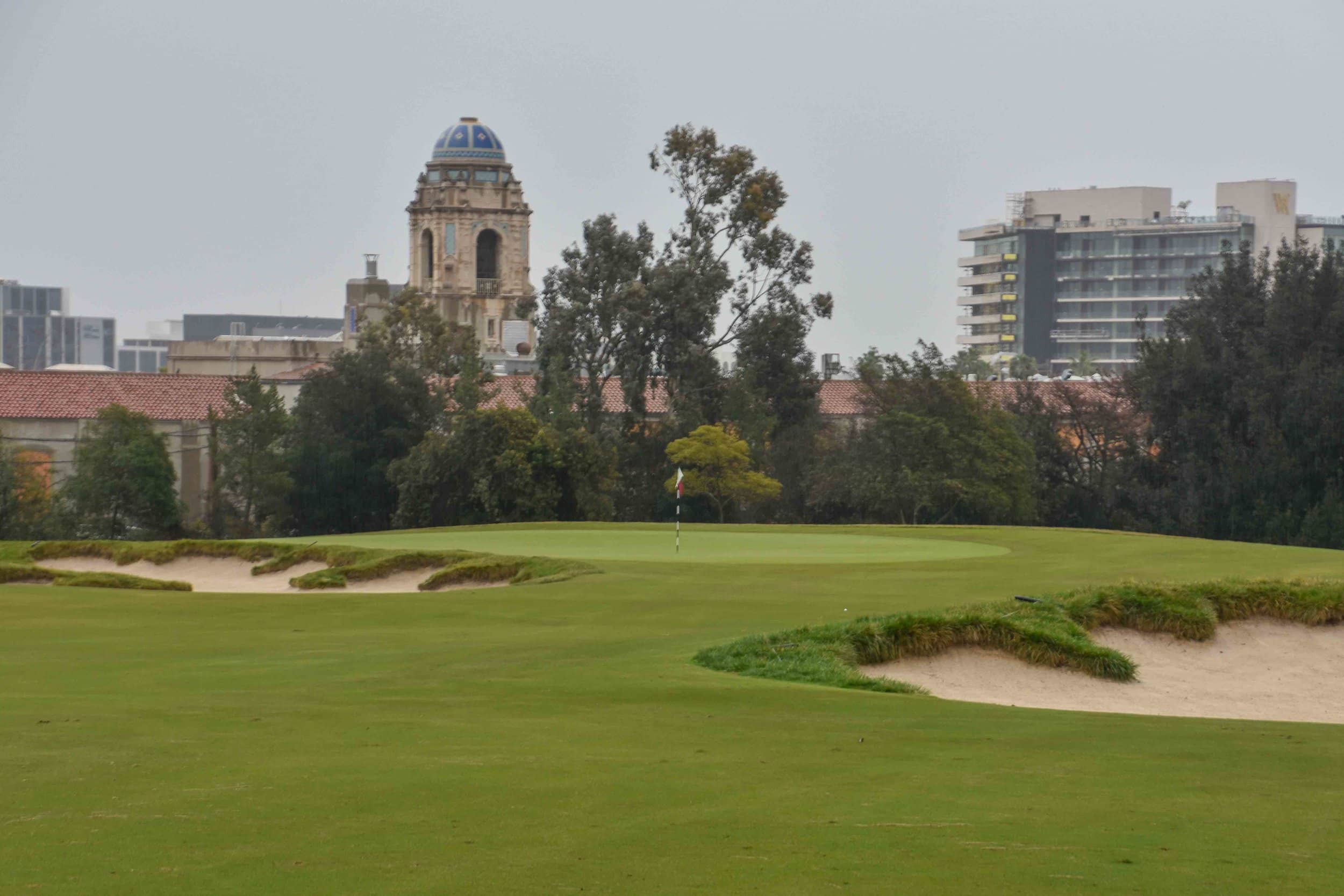
And the stage keeps getting bigger. Riviera hosted the 2026 U.S. Women's Open in June, won by Nelly Korda. The course will stage the Olympic golf competition at the LA28 Games and the U.S. Open in 2031. Even the tournament's original home has rejoined the story: the Los Angeles Country Club — the old windmill club — hosted its first major, the 2023 U.S. Open, on the North Course where Harry Cooper won a hundred years earlier.
A century in, the Los Angeles Open's real legacy isn't any one champion. It's the map. From a windmill at Pico and Alvarado to Los Angeles Country Club, from Griffith Park's Wilson Course to Rancho Park to Riviera, the tournament spent a hundred years proving the same point: when golf wants an audience, it comes to Los Angeles.